
Aircrew Jet Lag: A Rest Routine Around Changing Time Zones
A time-zone conversion is only one part of a crew trip. Use the roster, outstation local time and the next report point to identify rest windows and agree on contact times with family.
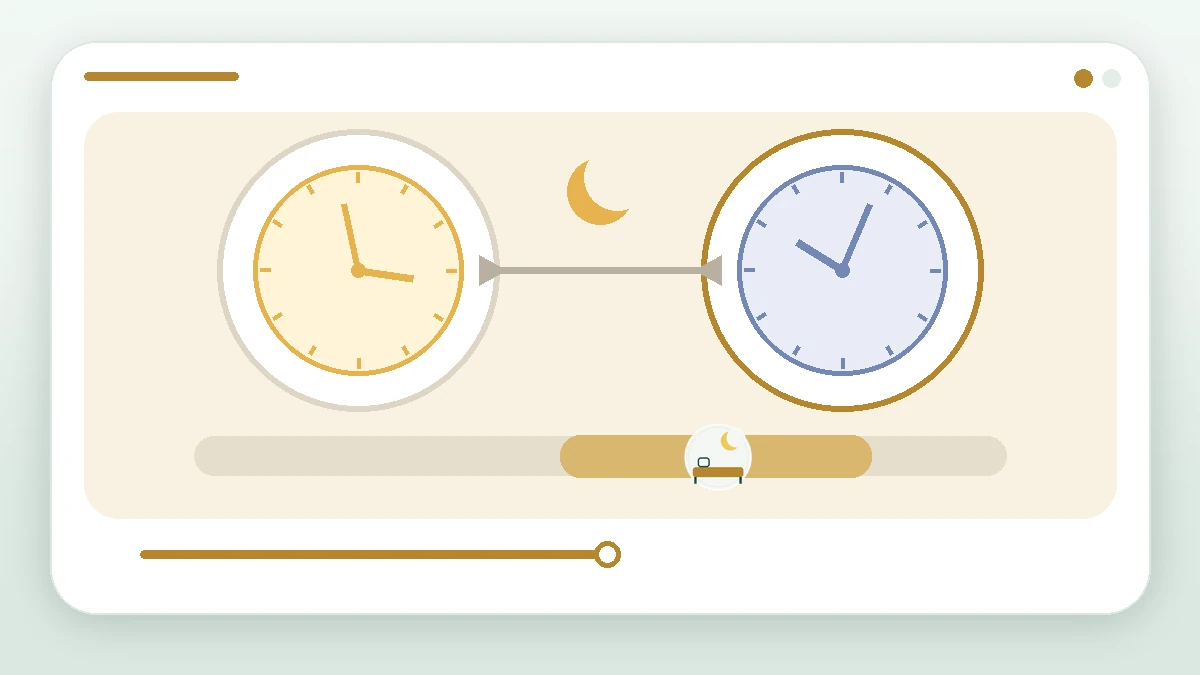
The roster says it is afternoon at the outstation, while the crew member's body may still be on base time. Converting the landing time is useful, but it does not tell family whether this is a good moment for a call. A trip plan should also identify the next duty and a possible rest window.
Start with the roster before planning activities
The effect of a trip varies with direction, time zones, duty hours and the individual. Check the report time, arrival, next assignment and overnight dates. Then mark time that might be available for rest. Revisit the plan when the roster changes rather than relying on the first version.
- Show base time beside outstation local time and check whether the date changes.
- Mark a possible rest window before the next report; a period without a flight is not automatically leisure time.
- Agree on a contact window with family and state which local time each person is using.
Make an unfamiliar room easier to rest in
CDC guidance for aircrew suggests reducing light and noise and paying attention to caffeine, alcohol and backlit screens near sleep. At a hotel, check the curtains, room temperature and alert settings. An eye mask or earplugs may help if they suit personal needs. This is general information, not individual medical advice; persistent sleep problems deserve advice from a qualified clinician.
Video transcript
Compare base and outstation dates and local times. Look for a possible rest window before the next report. Agree on a time to contact family and reduce light and noise in the hotel room.
Common questions
Will crossing one time zone always cause jet lag?
No. People and schedules differ. A small time difference does not rule out tiredness from night duty or interrupted sleep, so the clock difference alone is not a measure of how someone feels.
Should family call during the outstation daytime?
Daytime at the outstation might be set aside for rest. Let the crew member share a suitable contact window and confirm the date and local time on both sides.
What if the roster changes after a rest plan is made?
Check the next report, sector dates and overnight stop again, then adjust personal plans and contact times. Seek professional advice if sleep difficulties continue.
Read both local times on a rosterSort out dates and time zones before planning rest or a family call.CDC NIOSH: Aircrew and Jet Lag — General information on circadian disruption and the hotel sleep environment for aircrew.